An inheritance. A bonus that was larger than the rumor. A tax refund that made no sense. A settlement. A house that sold for more than the number you had quietly settled on in your head. This is what unexpected money looks like.
Money you did not plan for behaves differently from money you did.
Planned money arrives already spoken for. It has a job before it lands. Unplanned money arrives with nothing attached to it, and it turns out that money with nothing attached to it does not stay neutral for long. It quietly attaches itself to whatever you already wanted.
That is not a moral failure. It is just what happens in the gap before you decide. Which is why the gap is worth paying attention to.
Jesus is handed exactly this question
Someone in a crowd calls out to him:
Teacher, tell my brother to divide the inheritance with me.
This is a windfall dispute. A parent has died, there is money, and the split is contested.
Jesus will not touch it.
Man, who made me a judge or arbitrator over you?
I find that refusal interesting, and a little uncomfortable. He does not ask for the details. He does not weigh whether the brother is being unfair — and for all we know, the brother was being unfair. He simply declines the role, and then says something to everyone in earshot:
Take care, and be on your guard against all covetousness, for one’s life does not consist in the abundance of his possessions.
Then the parable.
The rich man did not earn it
The land of a rich man produced plentifully.
Read that again. Not he worked shrewdly. Not he expanded. The land produced. This is weather. This is a good year. The single most important fact in the parable is that the harvest is a windfall, and the man never once mentions that.
Then comes his plan, and the thing to do is simply count:
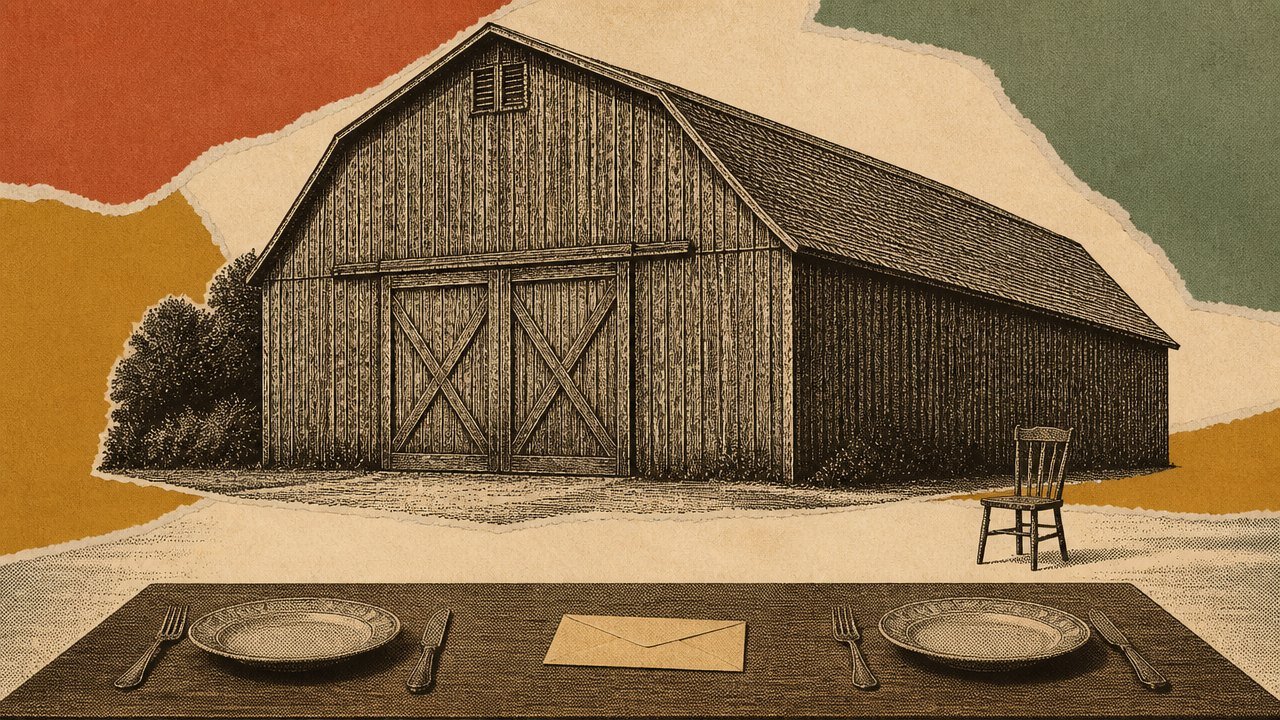
What shall I do, for I have nowhere to store my crops? … I will do this: I will tear down my barns and build larger ones, and there I will store all my grain and my goods. And I will say to my soul, Soul, you have ample goods laid up for many years; relax, eat, drink, be merry.
I, I, my — I, I, my, I, my, my — I, my.
And notice who he is talking to. He is talking to himself. He has a conversation with his own soul about what to do with a surplus, and there is not one other human being in the entire scene. No wife. No steward. No neighbor. No poor man at the gate. The parable is populated by exactly one person and his barns.
That is the loneliest sentence structure in the Gospels, and I do not think it is an accident.
Then God speaks, and the question is not why did you save?
Fool! This night your soul is required of you, and the things you have prepared, whose will they be?
Whose will they be. The question is about who ends up with it. He has arranged the whole thing around a man who will not be there.

What the parable does not say
It is worth being careful here, because this parable gets pressed into service for arguments it does not make.
It does not say that saving is wrong. It does not say that building a barn is wrong. Storing grain in a good year against a bad one is ordinary wisdom, and Scripture praises it elsewhere. Nowhere does God say you should not have built.
The verdict is different: So is the one who lays up treasure for himself and is not rich toward God.
For himself. That is the hinge. Not the storing — the direction.
The story you tell about where it came from
There is a warning in Deuteronomy that fits windfalls with unusual precision:
Beware lest you say in your heart, My power and the might of my hand have gotten me this wealth.
Notice it is a warning about a sentence you say in your heart. Nobody says this out loud. It is the private account you keep of why you have what you have.
And here is the odd mercy in unexpected money: it makes that account much harder to keep. You cannot really tell yourself you earned the inheritance. You cannot claim the weather. A windfall arrives with the truth already attached to it — that a great deal of what you have came to you rather than from you — and for a short window, before the story has time to reassemble itself, that is unusually easy to see.
That window does not stay open. Within a few months the money will feel like yours, and then like it was always yours, and then like it was owed.
Zacchaeus and the first move
The best example in the Gospels of someone handling money well is not a plan. It is a sentence said standing up in his own house, on the day.
Behold, Lord, the half of my goods I give to the poor. And if I have defrauded anyone of anything, I restore it fourfold.
Two things stand out.
It is specific. Half. Fourfold. Not I want to be more generous — a resolution which, as most of us know from experience, has a shelf life of about eleven days.
And it is immediate. He does not go away to think about it, consult anyone, or wait until his affairs are in better order. Something has happened to him and the money moves the same afternoon.
Some practical shape
I want to be careful not to hand you a formula, because Scripture does not give one and money is a place where people carry a lot of quiet shame already. But a few things seem right.
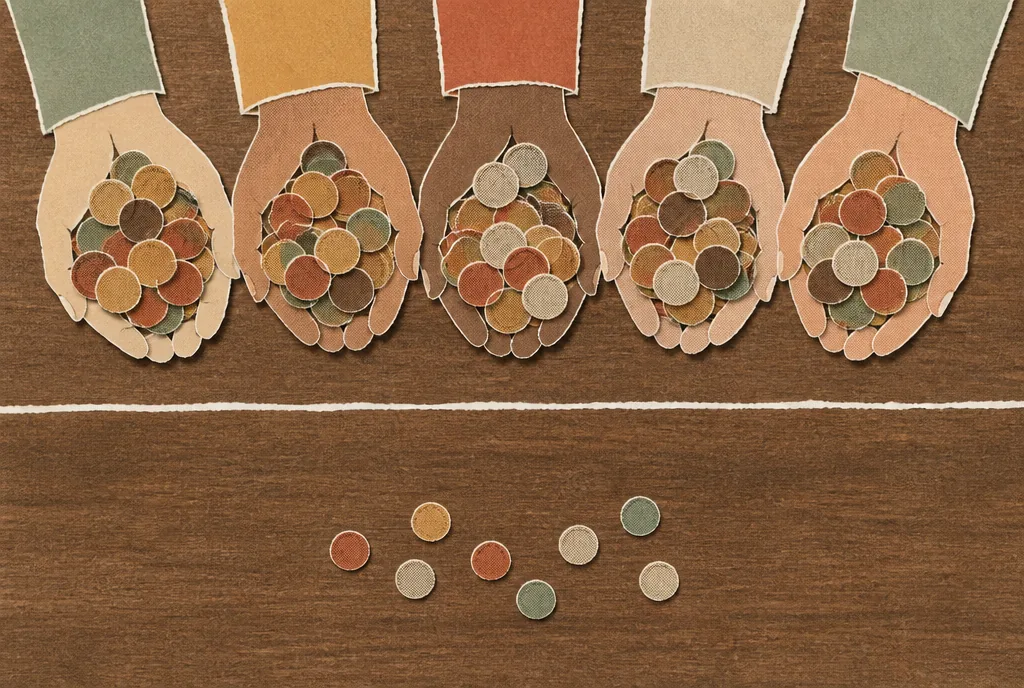
Wait — a little. Wealth gained hastily will dwindle, but whoever gathers little by little will increase it. Unexpected money makes people feel that they have to act. They rarely do. A short deliberate pause before any large decision is not indecision; it is refusing to let the money set the pace.
Give something first, and quickly, and specifically. Not as a tax and not to buy off your conscience. Do it before the money becomes normal, while you can still see it clearly. The first decision you make sets the frame for all the others, and it is much easier to be generous with a sum that does not yet feel like part of you.
Say it to one other person. The rich man’s problem was not arithmetic. It was that he had no one in the room. A single conversation — a spouse, a friend, your pastor or priest — breaks the closed loop.
Enjoy some of it, without guilt. This one matters, and Christians are often bad at it. Paul tells Timothy to charge the rich not to set their hopes on wealth, but on God, who richly provides us with everything to enjoy. Enjoy. That is in the same breath as the warning, from the same pen. The instruction is to do good, to be rich in good works, to be generous and ready to share — and a life organized that way is described a few words later as that which is truly life.
Not a smaller life. A truer one.
The gentle version of the question
If you are holding money you did not expect, you are probably already turning it over — and if some of what you feel is anxiety rather than delight, you are in good company. Unexpected money is often tangled up with something painful. Inheritances usually mean someone died.
So the question is not are you being greedy. That question makes people defensive and rarely makes anyone generous.
The better question is the one the parable is really asking: who else is in the room?
Is this a conversation you are having with your own soul about your own barns — or is anyone else in it? The person who died. The people who could use it. God, whom you might actually ask.
Rich toward God is not a quantity. It is a direction. And the good news of that is that you can turn while holding almost nothing, and you can fail to turn while holding a great deal, and either way today is a perfectly good day to do it.
The passages in this article
Luke 12:13-21, Luke 19:8, Deuteronomy 8:17, 1 Timothy 6:17-19, Proverbs 13:11