Matthew opens his gospel with seventeen verses of names, four women among them.
Most of us skip it. It reads like the phone book of a country that no longer exists, and there is a strong pull toward getting on to the part with the angel in it. I skipped it for years, and I suspect if you are honest you have too.
But Matthew put it first, deliberately, as the opening move of a document he knew would be read aloud in congregations. He is not padding. He is making an argument, and the argument is in who he chose to include.
The list is not neutral
Ancient genealogies were not archives. They were claims. You listed the ancestors who established what you wanted established, and you left out the ones who did not help.
Matthew is establishing that Jesus is the son of David and the son of Abraham — royal line, covenant line. That is the stated purpose in the first verse.
Which makes what he does next very strange.
He includes four women.
Genealogies of this kind ran through the fathers. Women appear rarely and usually only when there is a reason. Matthew names four before he gets to Mary, and any first-century reader would have noticed, because the four he picked are not the ones you would pick.
Tamar
In verse three: Judah was the father of Perez and Zerah by Tamar.
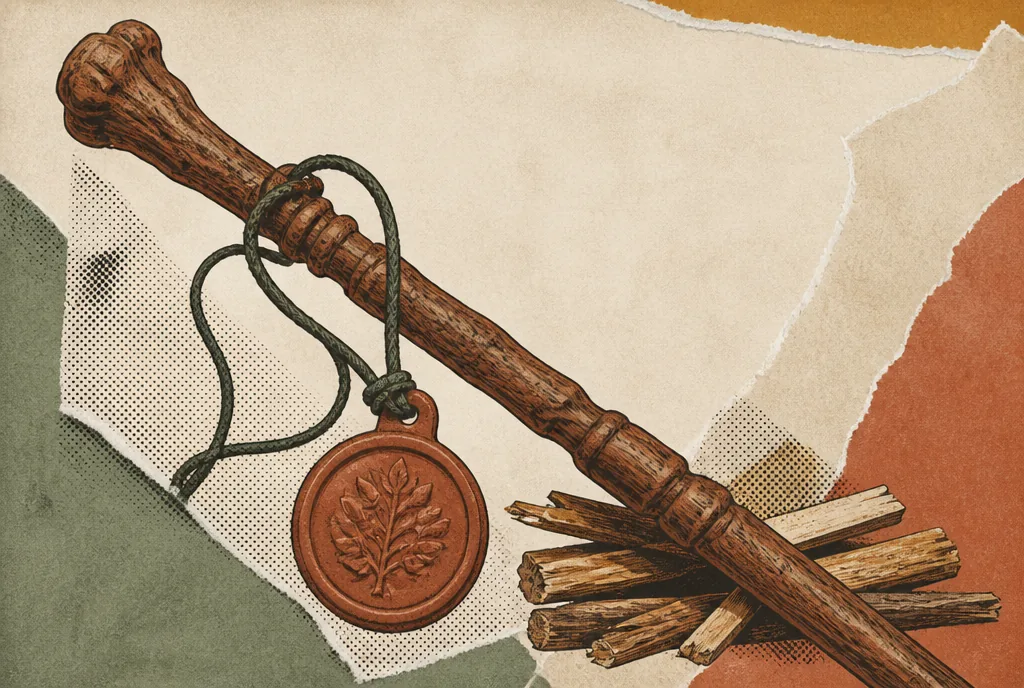
Tamar was Judah’s daughter-in-law. After being widowed twice and left without the protection she was owed, she disguised herself as a prostitute, sat by the road, and conceived twins by her father-in-law. When she was found to be pregnant, Judah’s first instinct was to have her burned. Then she produced his staff and seal, and he said the line that hangs over the whole episode: she is more righteous than I.
That story is in Genesis 38, sitting oddly in the middle of the Joseph narrative, and it is not edifying in any usual sense.
Matthew names her in the second sentence of his gospel.
Rahab
In verse five: Salmon was the father of Boaz by Rahab.
Rahab ran a house in Jericho and hid Israelite spies under flax on her roof. She was a Canaanite, from the city Israel was about to destroy, and she survived it by throwing in her lot with a God she knew only by reputation.
Everywhere else she appears she is named by her trade. Joshua introduces her as a prostitute whose name was Rahab. Hebrews commends her faith as Rahab the prostitute. James says it the same way. Three books, two testaments, and not one of them says her name without it.
Matthew writes Rahab and keeps going.
Joshua adds one more thing at the end of his account: she has lived in Israel to this day. The woman from the condemned city did not stay outside it.
Ruth
Same verse: Boaz the father of Obed by Ruth.
Ruth was a Moabite. That matters more than it sounds. There was an explicit law about Moabites and the assembly of the Lord, and a long history of hostility. She was a foreigner and a widow who attached herself to a bitter mother-in-law and gleaned in fields because that was what the destitute were permitted to do.
The law is Deuteronomy 23:3, and it is not vague. No Ammonite or Moabite may enter the assembly of the LORD. Even to the tenth generation. The book of Ruth never stops to argue about that. It just tells the story.
She becomes the great-grandmother of David.
And that part is not Matthew’s doing. The book of Ruth ends by laying the line out flat, in its last five verses: Perez, Hezron, Ram, Amminadab, Nahshon, Salmon, Boaz, Obed, Jesse, David. He is copying a genealogy the Old Testament had already published.
And the fourth one is not named
Verse six is where it gets pointed.
David was the father of Solomon by the wife of Uriah.
He does not write Bathsheba. He writes the wife of Uriah — naming her by the husband David had killed to cover what he had done.
Matthew could have written her name. He wrote the sentence that makes it impossible to read the line without remembering the murder. In the genealogy of Jesus. About the king the whole genealogy exists to connect him to.
What he is doing
Four women. A woman who was taken for a prostitute, a woman who was one, a foreigner from an enemy people, and a woman whose name is replaced by the memory of a man’s worst act.
This is the family Matthew chose to advertise.
I do not think that is an accident, and I do not think it is only about showing that God uses unlikely people, though it is partly that. Something sharper is going on.
Matthew is writing to establish a royal claim, and he deliberately runs the royal line through the parts of the story that a royal genealogist would have quietly dropped. He is telling you, in the opening paragraph, what sort of king this is going to be and what sort of company he keeps.
Everything that follows in that gospel — eating with tax collectors, the Canaanite woman who argues with him and wins, the Roman centurion whose faith is commended over Israel’s, the criminal beside him at the end — is already announced in the list of names you skipped.
The shape of the list
Matthew states his plan in verse seventeen: fourteen generations from Abraham to David, fourteen from David to the deportation to Babylon, fourteen from the deportation to the Messiah. Run the third set yourself and you reach fourteen only by counting Jechoniah twice, having already spent him closing the second. People have argued about that for a very long time and Matthew never explains it.
The list is not a straight transcript either. Compare verse eight — Joram the father of Uzziah — with the king list in 1 Chronicles 3, where three more kings sit between the two of them: Ahaziah, Joash, Amaziah. Matthew leaves them out. Not concealment: in this way of writing “the father of” covers descent generally, and trimming a list so it holds a shape was ordinary practice. His first readers knew Chronicles as well as he did.
What the shape establishes is that this is a composition. Someone arranged it. Which means the four names that do not belong were not left in by accident.
What Matthew never says
Here is the honest limit of all this.
He never tells us what the four have in common. Everything anyone says about why they are there, including everything I have said, is a reader filling a blank the author left.
And the fillings do not agree. That all four are outsiders. That all four are attached to some irregularity of marriage or sex. That all four were put in an exposed position by the men around them and acted anyway — which fits where the chapter goes next, since the very next paragraph is about a pregnancy that looked, from outside, like something a family covers up.
Each of those leaks somewhere. Rahab is never held up for shame in the New Testament; Hebrews and James both name her for her faith. Ruth’s story is not scandalous at all — the night at the threshing floor ends with Boaz telling her the whole town knows she is a worthy woman. And Bathsheba’s foreignness is an inference from her husband’s name rather than anything the text says; 2 Samuel calls her the daughter of Eliam.
I would rather leave it there than tighten a theory past what the text will carry. None of them changes the plain fact of the four names, sitting at the front of a royal pedigree.
Why it lands now
There is a particular kind of Christian anxiety that this passage speaks to directly, and it is not the intellectual kind.
It is the suspicion that you are the wrong sort of material. That there is a version of a believer’s life that runs cleanly from a good family through a sensible faith into a respectable middle age, and that yours has irregularities in it that would not survive being read out.
Matthew’s answer is not that your history does not matter. It clearly does; he wrote it down. His answer is that the line runs through it.
Not around it. Through it.
Tamar’s deception is in the line. Rahab’s house is in the line. Ruth’s foreignness is in the line. David’s worst night is in the line, marked in a way that will not let anyone forget.
And at the end of the seventeen verses, having named all of that out loud, Matthew arrives at Jesus, who is called the Messiah, and starts the story.
A small thing to try
Read Matthew 1 once, slowly, out loud, and stop at each of the four women. If you do not know the story, look it up — Genesis 38, Joshua 2, the book of Ruth, 2 Samuel 11. Twenty minutes, and the opening of the gospel stops being a list.
You may find, as I did, that the passage you always skipped is the one that tells you most plainly what the rest of it is going to be about.
Christians differ about a great deal. Not one of the traditions has ever suggested that these verses should be edited.
They are all still there, in every Bible, in every communion, at the front.
The passages in this article
Matthew 1:1-17, Genesis 38, Joshua 2, Ruth, 2 Samuel 11, Deuteronomy 23:3