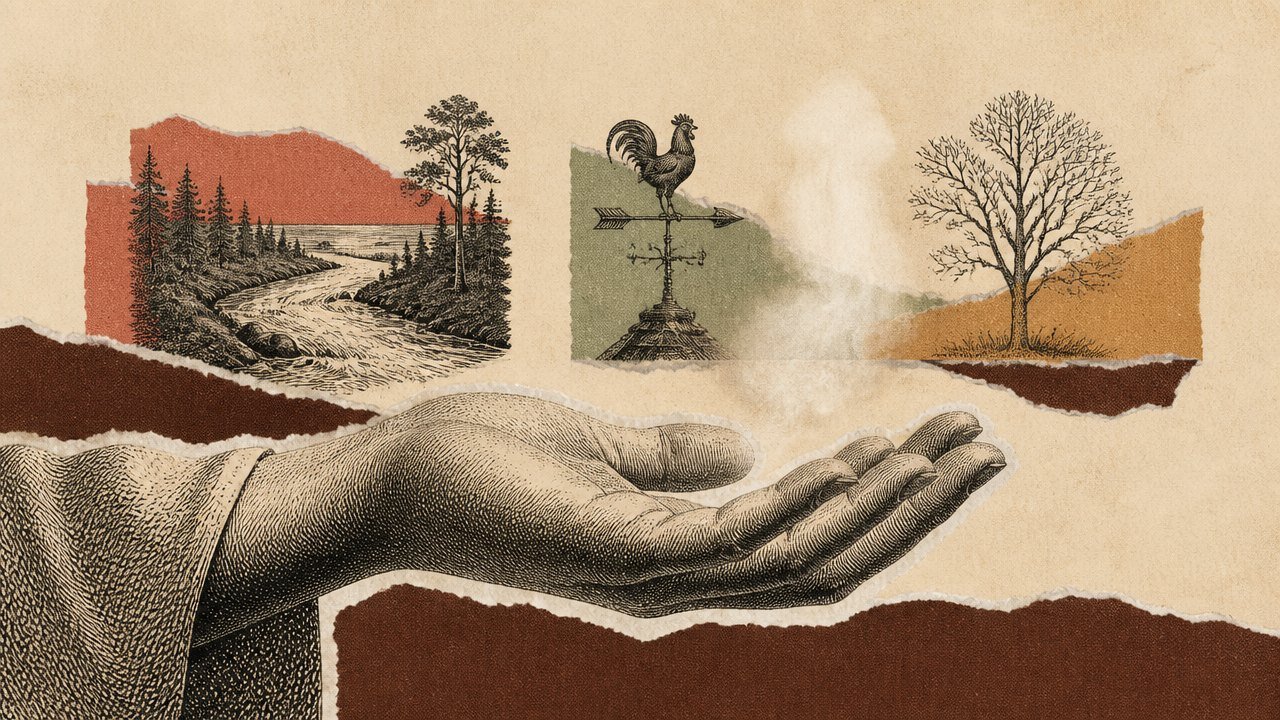
Vanity of vanities, says the Preacher, vanity of vanities! All is vanity.
That is the second verse of Ecclesiastes, and for most English readers it is also the moment the book goes wrong.
Vanity is a bad word for us now. It means a mirror, or a small hunger for compliments, or — in the older sense that most people no longer carry — futility, pointlessness, a waste of effort. So the book opens by seeming to announce that nothing matters, and a great many readers close it there and never come back.
The Hebrew word is hevel. And hevel does not mean pointless.
What the word actually is
The ESV footnotes it plainly: hevel refers to a mist, a vapor, a mere breath. It is the word for what you can see on a cold morning when you exhale, and for what happens to it two seconds later.
Not worthless. Not a lie. Just — you cannot hold it.
Try it in the verse. Breath of breaths. Everything is vapor.
That is a different book. It is not a man saying nothing matters. It is a man saying that everything he can see is real and beautiful and utterly impossible to grip, and that he has spent his life trying to grip it anyway.
The phrase hevel havelim is a Hebrew superlative construction, the same shape as holy of holies and song of songs — the most X of all X. Vapor of vapors. The vaporiest vapor. It is not an insult; it is an intensifier.
And it turns out that hevel is also a name. Adam and Eve’s second son, the one whose life is over in four verses, is Hevel. We say Abel.
Watch what he does next
Having declared everything to be vapor, the Preacher does not then describe a meaningless world. He describes a moving one.
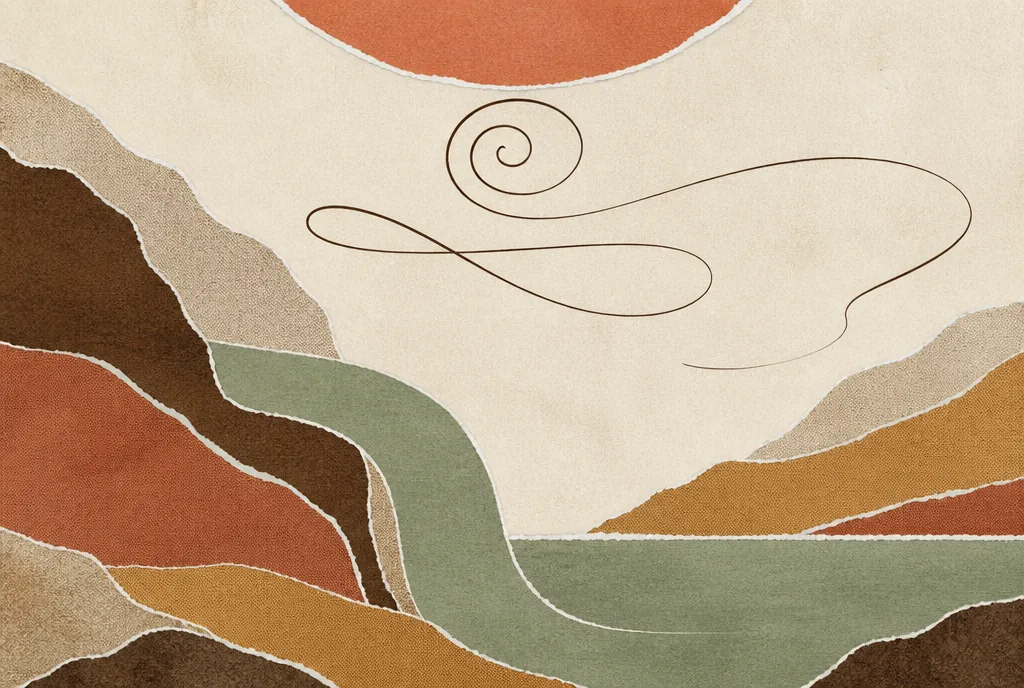
A generation goes, and a generation comes, but the earth remains forever. The sun rises, and the sun goes down, and hastens to the place where it rises. The wind blows to the south and goes around to the north; around and around goes the wind, and on its circuits the wind returns. All streams run to the sea, but the sea is not full.
Everything in that passage is in motion, and nothing in it arrives. The sun does not get anywhere. The wind circles. The rivers run and run and the sea is never full.
He is not saying it is all rubbish. He is saying it will not hold still and it will not add up, and that this is simply what the world is like — and that we are the only creatures in it who find this unbearable.
Then the sentence that names the ache:
All things are full of weariness; a man cannot utter it; the eye is not satisfied with seeing, nor the ear filled with hearing.
The eye is not satisfied. You can look at beautiful things your whole life and the looking never fills up.
A book that refuses to resolve
This is why Ecclesiastes has always sat slightly awkwardly in the canon, and why I have come to love it.
It will not tie off. It says the wise man and the fool meet the same end. It says he hated life. It says there is nothing new under the sun. It also says: Go, eat your bread with joy, and drink your wine with a merry heart… Enjoy life with the wife whom you love… because that is your portion in life… Whatever your hand finds to do, do it with your might.
Both of those are in the same book. Nobody smoothed them out.
There is a closing verse that many readers reach for as the resolution: Fear God and keep his commandments, for this is the whole duty of man. And it is genuinely the end of the matter, and I do not want to argue it away.
But notice what it does not do. It does not go back and cancel anything. It does not say and therefore the vapor was not really vapor after all. Everything the Preacher said stands. The book ends by telling you where to plant your feet — not by telling you the ground has stopped moving.
Why this is a mercy
Here is what I think the misreading costs us.
If Ecclesiastes says nothing matters, it is a book for cynics and you should probably keep away from it. But if Ecclesiastes says nothing holds still, it is a book for the exhausted, and that is most of us at one time or another.
Because the specific weariness the Preacher is describing is not depression. It is the fatigue of trying to make life stay put.
You get the qualification, and then the qualification is normal. You get the house and then the house needs a roof. You have the good day with your family and it is over by nine and you cannot get it back and you are already slightly anxious about whether the next one will be as good. You do the work and someone else will do it after you and probably better, and nobody will remember which of you started it.
There is no remembrance of former things.
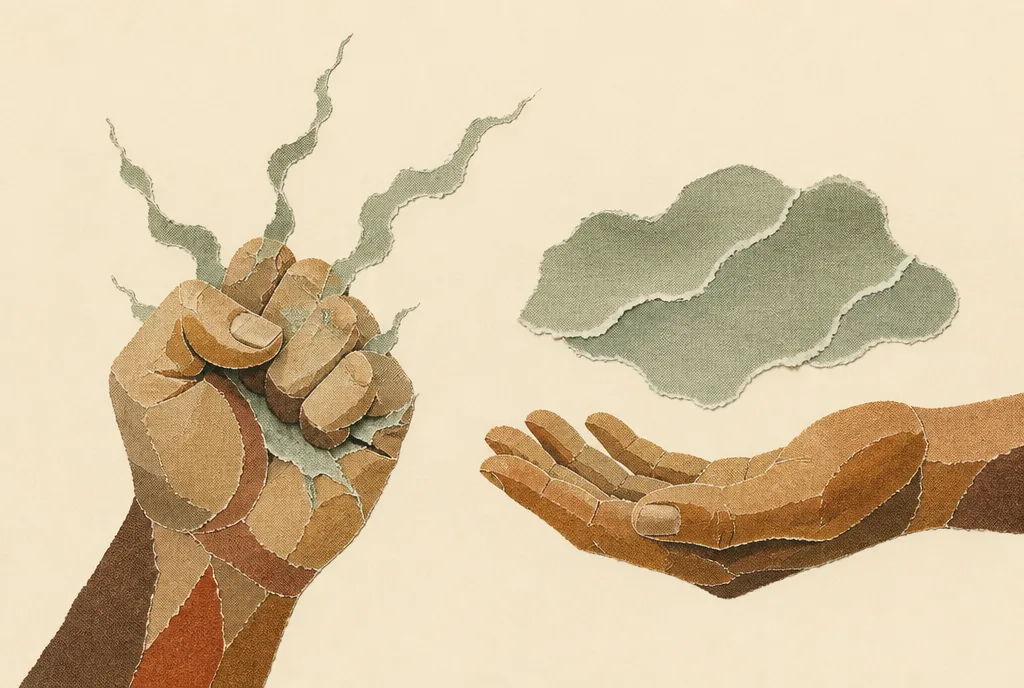
The temptation is to hear that as an accusation. It is not. It is a description, offered by someone who has run the experiment further than you have — he had the money, the projects, the vineyards, the wisdom — and is reporting back that the grip does not work. Not because the things are bad. Because they are vapor, and vapor is not gripped, it is breathed.
Breathing instead of gripping
A vapor can be beautiful. You just have to receive it in the two seconds it exists rather than trying to bottle it.
That is very close to what Ecclesiastes actually recommends, over and over, in between the hard sayings: eat the bread, drink the wine, do the work, love the person, and stop demanding that any of it become permanent, because permanence was never on offer under the sun and asking for it is what is wearing you out.
There is only one thing in the book that does hold still, and he saves it for the last line. Everything else moves.
A word to sit with
If you have avoided Ecclesiastes because it sounded bleak, try it again with one substitution. Every time you meet vanity, read vapor, or breath, or mist.
Breath of breaths. All is breath.
The tone changes completely. It stops sounding like a man sneering at the world and starts sounding like a man standing outside on a cold morning, watching his own breath go, and telling you the truth about it as kindly as he knows how.
Your life is a vapor. So is mine. That is not the bad news. The bad news would be if it were a vapor and you spent all of it trying to hold it.
The passages in this article
Ecclesiastes 1:2, Ecclesiastes 1:4-11, Ecclesiastes 9:7-10, Ecclesiastes 12:13, Genesis 4:1-8