
A time to weep, and a time to laugh; a time to mourn, and a time to dance. Grief has no timetable.
Ecclesiastes 3 is read at a great many funerals, and it is usually read as consolation. There is a season for everything, and this season will pass.
I want to read it slightly differently, because I think the more useful word in that passage is not time. It is and.
There is a time to mourn and a time to dance. Both are listed. Neither is presented as the correct one. The chapter is not telling you to hurry through the first toward the second.
What we actually do
We are bad at this, and I do not think it is malice.
Someone loses a person. For a fortnight there is enormous support — food arrives, people call, someone organizes a rota. Then the funeral happens, which functions socially as a conclusion, and within a month the calls thin out.
And the bereaved person, who is often only just beginning to understand what has happened, finds that the world has moved on to the next thing while they are still in the first week of it.
The three-month mark is the one I have come to watch for. That is usually when the support has gone and the reality has fully arrived, and it is the loneliest part.
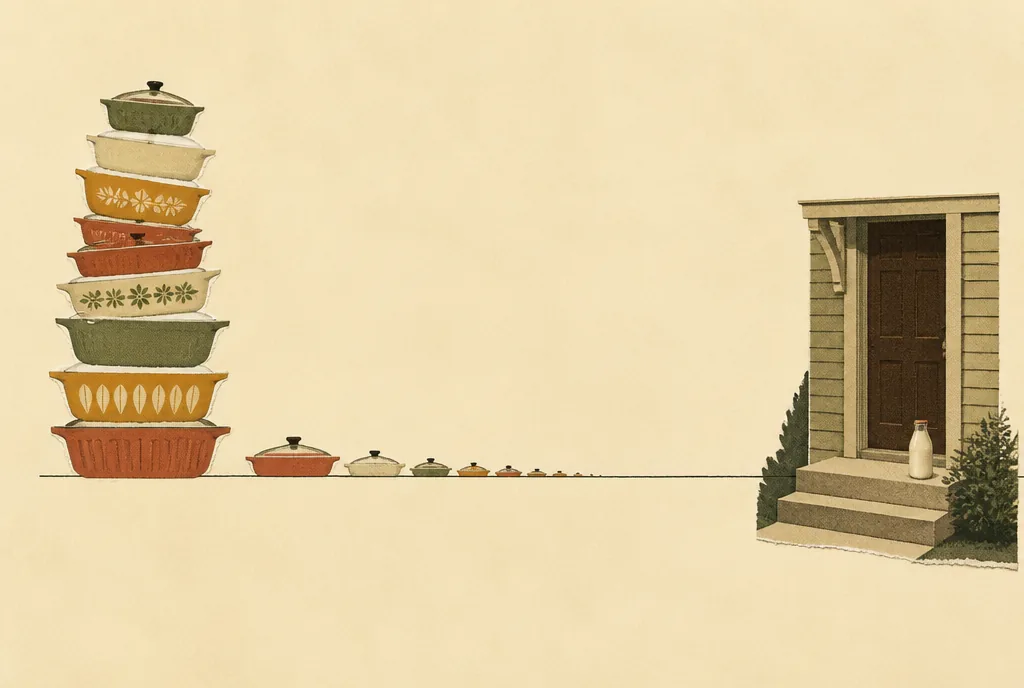
The rush is about us
Here is the uncomfortable thing.
Our impatience with other people’s grief is very rarely about them. It is about how hard it is to be near.
Sitting with someone who is still sad after six months puts a question in the room that we cannot answer. It reminds us that this will happen to us and to everyone we love. So we start, gently and with real affection, to signal that it might be time to be doing better.
We do it in small ways. How are you doing now? — with the emphasis on now. Have you thought about getting out more? Comparing them favorably to someone who is still struggling. Talking about the person less, because we do not want to upset them, which they experience as the person being erased.
None of that is cruelty. All of it communicates a deadline.
What Scripture actually models
There is more grief in the Bible than in most of what gets preached from it.
Israel wept for Moses in the plains of Moab for thirty days. The Egyptians wept for Jacob for seventy, and then Joseph held another seven days of mourning at a threshing floor on the way to the grave. David fasted and lay on the ground for a week while the child was ill.
Job’s friends sat with him on the ground for seven days and seven nights, and no one spoke a word to him, for they saw that his suffering was very great. That silence was the best thing they ever did, and it is worth knowing why it ended. They did not run out of patience. They ran out of silence. The rest of the book is thirty-odd chapters of them explaining his loss to him, and at the very end God tells Eliphaz plainly: my anger burns against you and against your two friends, for you have not spoken of me what is right.
Jesus wept at Lazarus’s tomb knowing what he was about to do.
None of that suggests a schedule.
The book that does not resolve
Lamentations is five chapters of grief over a destroyed city, kept in the canon and read publicly ever since, with no attempt to tidy it.
Look at how it is made. The first four chapters are alphabetic acrostics — each unit beginning with the next letter of the Hebrew alphabet, in order, and in chapter three three times over for every letter. The most controlled form available, imposed on the least controllable subject there is. Somebody sat down in the wreckage and did the hardest formal work he knew how to do.
And then chapter five stops. Same twenty-two lines, alphabet abandoned. The form gives out at the end.
So does the book: Restore us to yourself, O LORD, that we may be restored! Renew our days as of old — unless you have utterly rejected us, and you remain exceedingly angry with us.
That is the last verse. Nothing comes after it. In the synagogue the reader goes back and repeats the previous line aloud so the reading does not end there, which tells you how hard that ending has always been to sit with — and the text still ends where it ends.
Whoever assembled these books had the option of leaving this one out. They kept it.
What Paul actually says
The verse people reach for is 1 Thessalonians 4:13: that you may not grieve as others do who have no hope.
It is frequently used to mean Christians should not grieve much. That is not what it says.
It says as others do who have no hope. The comparison is about the character of the grief, not the quantity. Paul assumes you will grieve — he is writing to comfort people who are already doing it. What he adds is not a limit; it is a horizon.
Grief with hope is still grief. It is not a smaller thing wearing a brave face.
Read to the end of the paragraph and Paul states his purpose outright: therefore encourage one another with these words. Something to say to each other, not a standard to measure each other against. The second use has done a lot of quiet damage.
What exactly happens to the dead between now and the resurrection is a question Christians have answered differently, and I am not going to settle it here. What all three of the great traditions confess together, in the same creed, is that Christ rose, that he will come again, and that there is a resurrection of the dead and a life of the world to come. That is what Paul is leaning on, and it is as much as this article needs.
About the stages
You have probably been told grief comes in five stages. It is worth knowing where that came from, because the popular version is not what was proposed.
Elisabeth Kübler-Ross drew those categories from interviews with people who were dying, not with people who were bereaved. She said herself that patients often showed two or three at once and not in a fixed order, and she came to dislike how rigidly the model was being used.
So there is something real underneath it. A great many people do recognize denial, anger, bargaining, sadness, acceptance, in some arrangement, at some point. If you have felt those, you are not imagining it.
What is not there is the staircase — that they come in order, that finishing one gets you to the next, that reaching acceptance means you have completed something. If you have been quietly grading yourself against that list, it was never meant to be a scorecard, and the woman who wrote it said so.

If you are the one grieving
A few things, offered lightly, from people who have been there and from what Scripture seems to assume.
You are not behind. There is no correct pace, and the people who seem to have recovered faster are frequently not further along, only quieter.
It comes in waves, and the waves get further apart rather than smaller, and one will knock you over in a supermarket eighteen months in over something trivial.
You are allowed to say it out loud to God in the plainest terms. The psalms are full of people doing exactly that, at length, and God kept the record.
And if the grief has become something heavier — if you cannot function, if it has stopped moving at all — please tell a doctor and tell one person who loves you. That is not a failure of faith. Elijah was given food and sleep before he was given a word.
If you are the friend
The instruction is unglamorous. Paul puts it in half a line — weep with those who weep — and attaches no time limit to it at all.
Keep turning up after everyone else has stopped. Put a note in your calendar for three months out, and six, and for the anniversary, because you will forget and they will not.
Say the person’s name. People are terrified of upsetting the bereaved by mentioning the dead, and almost universally the bereaved want to hear the name. The silence is worse than the sadness.
Do not offer a reason. There may be one; you do not know it, and it is not yours to supply.
And do not set a deadline, even a kind one. A time to mourn has no stated length anywhere in that chapter.
The last thing
Ecclesiastes does not resolve the problem of death. It is remarkably honest that it cannot. What it does, repeatedly, is turn back to the ordinary given day — eat your bread, drink your wine, do your work, be with the person you love.
Not because those things defeat grief. Because they are what is actually in front of you, and they are given.
Some seasons, that is the entire instruction.
The passages in this article
Ecclesiastes 3:1-8, 1 Thessalonians 4:13-18, Lamentations, Job 2:11-13, Romans 12:15, Ecclesiastes 9:7-10